
The AI Question Authors Are Dodging (I’m Not Going To)
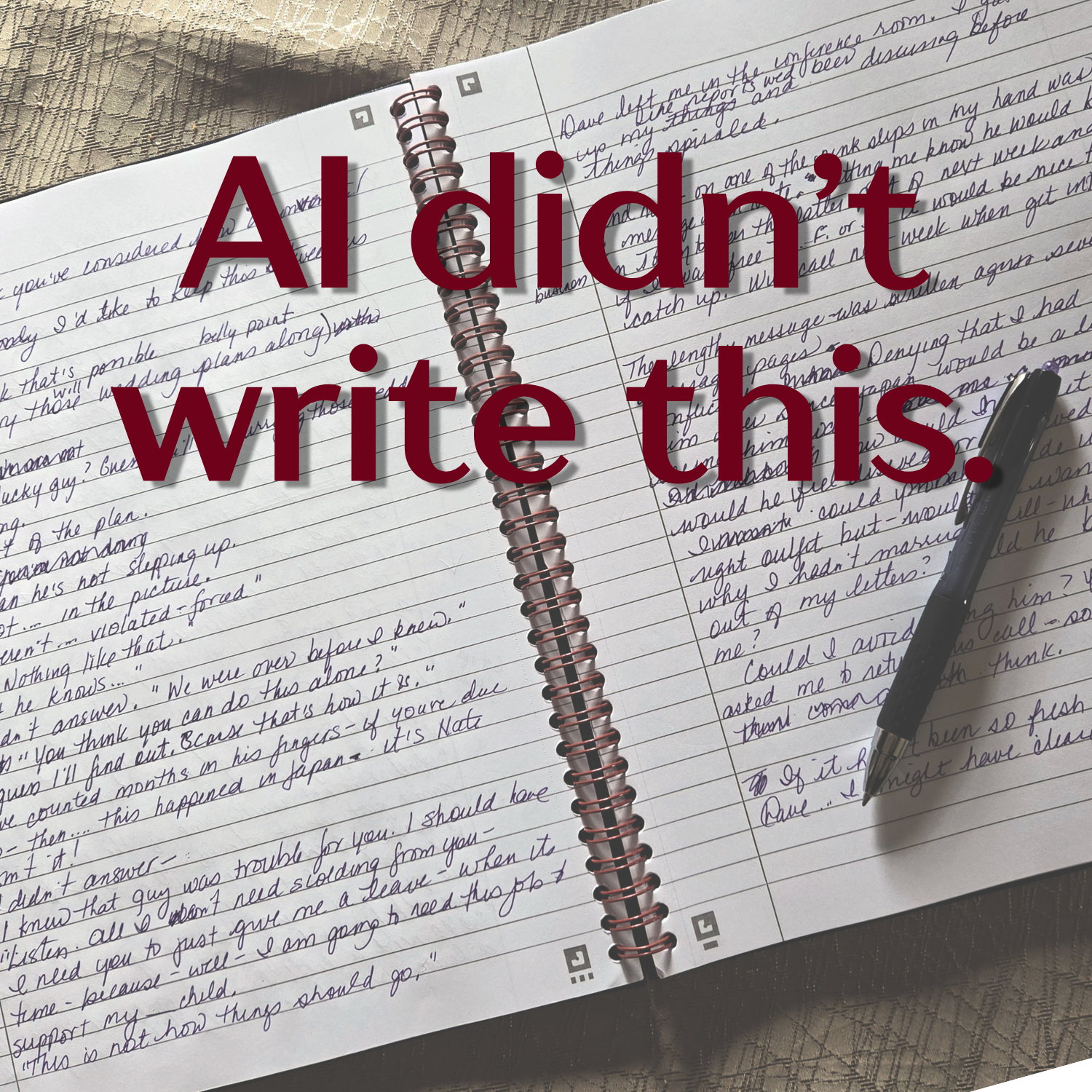
There’s a conversation happening in the author community right now that feels a lot like the moment before a thunderstorm. Everyone can feel it coming. Some people are running for cover. Some are standing in the open field, arms out, daring it to hit them. And some, frankly, are pretending the sky looks perfectly fine.
The conversation is about AI. And I think it’s time I had it out loud.
Here’s what’s going on. Some authors are using AI to generate complete novels, slapping a name on the cover, and flooding the market. Readers have caught on, and the response has been something between vigilance and outright witch hunt. Suspicion is running high enough that authors who use AI for anything at all, even spell-checking, are finding themselves defending their creative integrity in comment sections. Meanwhile, a quieter anxiety is spreading through the writing community itself: the fear that AI is coming for our jobs, our readers, and eventually our relevance.
I understand that fear. I really do. Writing is personal in a way that most careers aren’t. Your voice, your perspective, the particular way you see the world and translate it onto the page, that is not a commodity. The idea that a machine might replicate it, or worse, replace it, touches something deep. I’m not dismissing that.
But here’s the thing. I’m a scientist by training. An MSc in Hydrogeology, an MBA, a career that took me from environmental consulting to medical devices to biotech marketing before I ever sat down to write a novel. And my scientific background has wired me in a particular way when it comes to new technology: I don’t run from it. I study it. I get curious about what it actually does, as opposed to what people fear it might do. I’ve watched enough technological shifts to know that the ones who get left behind aren’t the ones who engaged with the new thing. They’re the ones who refused to.
I started using AI tools because I wanted to understand them, the same way I’d want to understand any instrument that might affect my field. What I found surprised me, not because AI is more powerful than I expected, but because it’s more limited in the ways that matter most to writing fiction. It can process language. It cannot feel. It can string sentences together. It cannot make the choice I made to center a love story on a 78-year-old woman, because that choice came from somewhere specific and human and stubborn. It cannot spend an evening going through 1970s newspaper archives because the exact dress Maddie would choose for a gala matters to the integrity of the story. It cannot borrow the emotion of a real experience and embed it in a character before fully understanding why.
So where does AI actually fit in my process? Honestly? It helps me with the things my degrees didn’t cover. I have the analytical mind and the research instincts and the marketing experience, but no MFA, no formal training in the craft of fiction writing. AI has become a useful grammar and editing assistant, a sounding board when I’m considering promoting through a new channel, a tech resource when I’m working through a problem programming my author website, and a research starting point that I then verify through proper sources. What it is not, and has never been, is the author of anything you’ve read with my name on it.
There's something worth saying about process more broadly. Authors have always worked with editors, beta readers, writing groups, and critique partners whose feedback shapes the final language on the page. Nobody questions whether a novel is "really" the author's when an editor has pushed back on structure, or a trusted reader has flagged a character inconsistency, or a writing group has workshopped a pivotal scene. Those collaborations are considered part of the craft, not a compromise of it. Using AI as a drafting assistant sits in that same tradition. It's a tool that responds, pushes back, and occasionally catches something I missed. The decisions, the vision, the voice, those remain entirely mine. They have to, because no AI has lived my life, made my choices, or spent twenty years crossing paths with someone without knowing it.
And the words themselves? Every word in Out of Time and Next Time is mine. The parallel timeline architecture I conceived on a road trip, the recipes drawn from real family heritage, the historical details I tracked across a master spreadsheet that would make my professors nod in recognition, the emotional truth I put into Maddie before I fully understood I was doing it. All of it mine. Our Time will be no different.
I’ve put that commitment in writing, literally. Both published novels carry a no-AI-training notice in the copyright pages, protecting the creative work from being used to generate imitation content. And I’ve now added an AI policy page to my website, because I think readers deserve to know exactly where an author stands, and authors deserve to say so clearly rather than hoping nobody asks.
Here’s what I’ve come to believe. The witch hunt isn’t really about AI. It’s about trust. Readers want to know that what they’re holding represents a real human being’s genuine effort to communicate something true. That the hours put in were real. That the choices were intentional. That someone actually cared. AI-generated content at scale threatens that trust not because machines are writing, but because some people are using them to fake the caring.
I’m not faking anything. And I’m not afraid to say so.