
The Camera That Came Back: A True Story About Chance and Choices
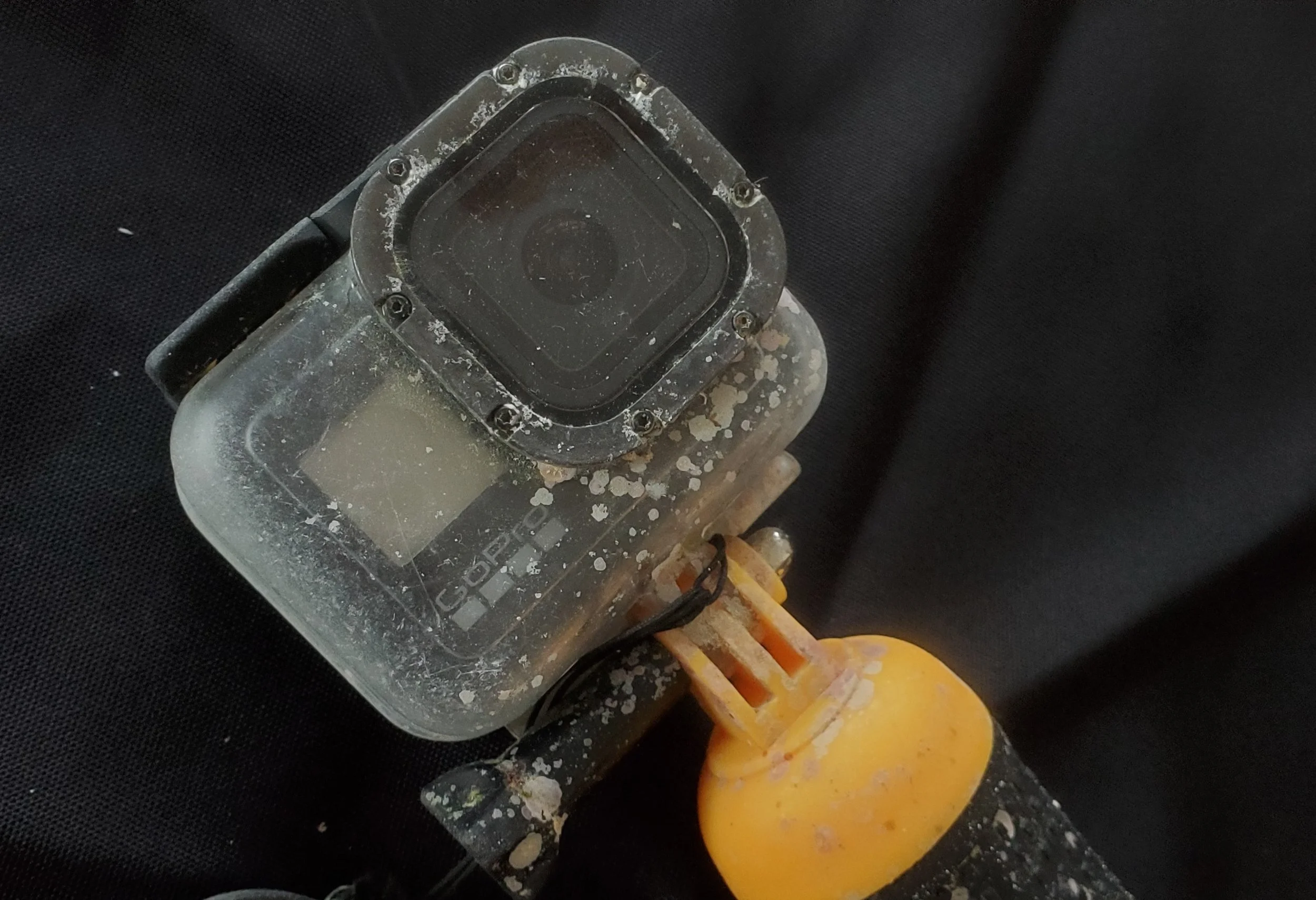
Last spring, I lost my GoPro camera while diving in Belize.
The seas were rough that day, swells topping five feet, and getting safely back on the boat required all hands on deck. Literally. The crew had us remove our gear in the water so they could haul it aboard while we climbed the ladder. I was focused on not getting slammed against the boat or losing my grip as the waves surged.
Once aboard, dripping and catching my breath, I checked my gear. My camera was gone.
The crew circled back, searching the surface for the bright yellow floaty handle. Nothing. After a few passes, we gave up. I felt that particular sting of loss that comes from carelessness, the kind where you replay the moment and think "if only I'd not been in such a hurry get out of the water and handed it up first."
Worse than losing the camera itself was losing what I was certain I'd captured: a sea turtle tucked under a ledge at the bottom of the reef, ancient and unhurried.
Several months passed. I'd long since moved on, replaced the camera, stopped kicking myself about it.
Then I got a message through my author Instagram: "Do you dive?"
I stared at it, curious but cautious. Random messages from strangers don't usually lead anywhere good.
I replied.
Turns out it was from a physician in Little Rock, Arkansas. A diver. Who had found my camera on that same Belize reef. Who tracked me down through the photos still stored on the SD card. Who wanted to return it to me.
The odds of this happening feel astronomical. The ocean floor is vast. Currents move things. Sand covers things. Fish investigate things. And yet somehow, months after I'd lost it, this particular person dove that particular site, spotted a camera lodged in the reef, retrieved it, got it working, looked through the images, found the one I’d taken of my business card, tracked down my Instagram, and reached out.
Every single one of those steps required a choice. He could have left it there. Could have wiped the card. Could have kept it. Instead, he chose connection over convenience.
Thinking about choices like the ones that diver made is why I write stories where the same two people meet at different times in their lives, in different circumstances, across parallel timelines. Why do I believe choices matter so much? Why do I know that timing matters?
Because I've seen it happen.
Not in some mystical, meant-to-be way. In a very real, choice-by-choice, action-by-action way. That camera came back to me because someone made a series of small decisions that prioritized kindness and effort. Another person might have made different choices. The camera would still be on the reef.
In my Maddie and Nate books, I explore how the same two souls find each other across different timelines, meeting in their golden years in one world, in 1970s Toronto in another, and as young adults in a third. The question isn't whether they're "meant to be." The question is: what do they do when they find each other? What choices do they make?
Because chance might bring people together, but choice is what keeps them there.
A camera falls into the ocean. A diver sees something yellow – likely trash. He could swim past. He doesn't. He finds a camera. He picks it up. That's not fate. That's decision.
Two souls meet, like my Maddie and Nate in each of my books. They could walk away. They don't. That's not destiny. That's choice.
The camera is sitting on my desk now. The dive housing and handle were seriously corroded from salt water, but the camera and memory card survived. The turtle video was still there, just as I remembered. But the real gift wasn't the footage. It was the reminder that connection requires action, that kindness is a choice we make moment by moment, and that sometimes, against all odds, we get a second chance to hold onto something we thought we'd lost.
We just have to choose to reach for it.