
The People Who Knit Us Together
In Newfoundland, when people want to know where you come from, they ask, "Who knit you?"
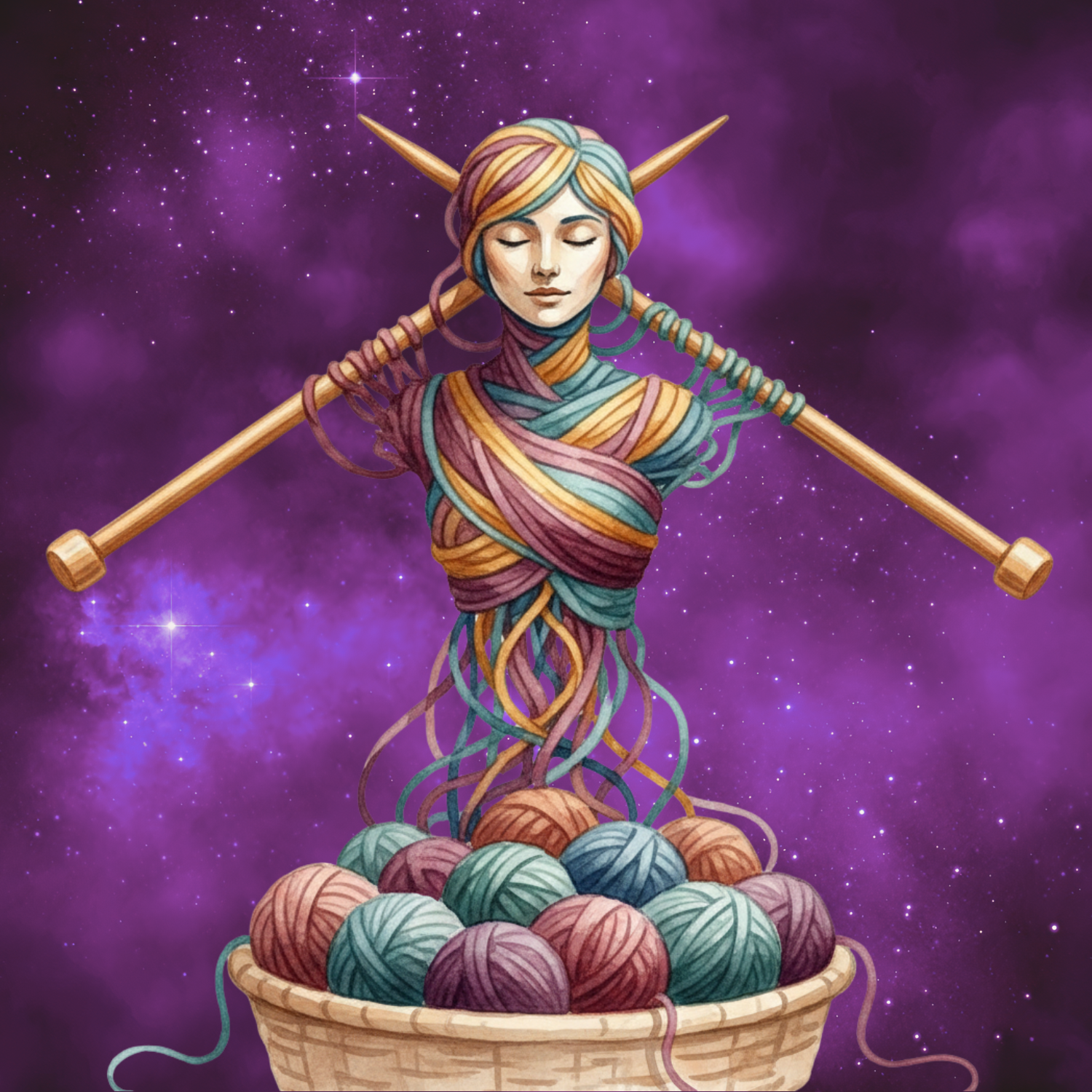
It's a question that's been on my mind lately, both in life and in fiction. In my newsletter this week, I wrote about the people who shape our stories without necessarily getting center stage. The mentor who redirects a career with a single question. The friend who sees possibilities we've dismissed. The spouse whose expectations cast shadows long after they're gone.
In the Maddie and Nate series, these secondary characters fascinate me precisely because they're not secondary at all. They're the reason Maddie and Nate become who they are in each timeline.
Betsy: The Shadow That Shapes Everything
In Out of Time, we meet Nate as a widower. Betsy is gone, but her influence permeates every corner of Hope Point Lighthouse B&B. The silver tea service she found in an Oxford antique shop still sits on display. The way Nate defers to certain social expectations, then catches himself doing it. The quiet relief he feels at no longer needing to navigate her discomfort with anything unconventional.
Betsy wasn't a villain. She was a woman of her time, raised with certain beliefs about status and propriety that she never questioned. She avoided situations that made her uncomfortable rather than risk saying the wrong thing. She yearned for a baby, and when she and Nate adopted Ann at nine years old, she poured everything into molding her daughter into the proper young lady she believed a girl should become.
The marriage had eroded gradually. More criticism than kindness. Separate bedrooms that became permanent. A partnership that functioned on duty rather than desire. And yet, Nate honored his commitment to her through her final illness, caring for her as she weakened, drinking "time to make tea" moments whenever things became too heavy.
Betsy knit Nate into a man who values commitment deeply, who knows what it means to stay when staying is hard. She also left him hungry for something he'd stopped believing in: a connection where he could be truly seen, truly known, fully himself.
Will: The Comfortable Cage
In Next Time, we see Maddie at 38, married to Will. On paper, he's a catch. Handsome, charming, successful with his electrical contracting business. Their friends like him. He's an enthusiastic father to Anne, taking her to swimming lessons and softball games, coming home muddy from tree climbing and frog catching.
But look closer.
Will calls Maddie "Babe" while patting her bottom like she's his property. He brags about her engineering career at parties, then expects her to fetch his beer and make his snacks at home. He considers cooking and laundry "pink jobs," not because he's cruel, but because it never occurred to him to think differently. He views their marriage as advantageous primarily for him: a wife at home to take care of things while he gets ahead.
The tragedy isn't that Will is a bad person. It's that he's likable enough that his chauvinism isn't immediately obvious. Maddie is a woman who demands to be taken seriously at work, who fights for recognition in a male-dominated industry. Yet at home, with Will, she becomes someone smaller. Someone who keeps the peace. Someone who has learned that expecting more is pointless.
Will knit Maddie into a woman who knows what it feels like to settle. Who understands the difference between being loved and being possessed. Who recognizes, when she finally meets Nate, what it looks like when someone sees all of who she is and wants her to take up more space, not less.
Ann: The Daughter Shaped by a Single Decision
Ann is adopted at nine years old, arriving in the Jacobs household with her art supplies and Fluffy the unicorn. By the time Nate is offered the Toronto position, she's finishing high school. The same teenager. The same potential. But who she becomes depends entirely on a choice her father makes.
In the timeline where Nate accepts the Toronto position, Ann completes a three-year art history degree and marries Brandon, a young man from a good family. But something else happens too. In her first year of university, she interviews Maddie for a journalism course. That single assignment changes everything. Ann keeps reaching out for advice. Phone calls become office visits become regular lunches and dinners. Maddie becomes a hybrid mentor-aunt-friend. Ann finds in her what her mother's example never showed her was possible: a woman who built a career, made hard choices, refused to shrink.
When Ann eventually opens her own art gallery, she structures the financing from her in-laws as a loan, not a gift. She wants to do things for herself. Brandon's father tells Maddie at the wedding that Ann is "a big fan" who says Maddie has "inspired her to be her own boss." Ann in this timeline is still sorting through her mother's influence, but she's questioning it, pushing against it, becoming her own person.
In the timeline where Nate stays in Boston, Ann remains embedded in the world Betsy has carefully constructed. She attends Notre Dame, the prestigious all-girls school Betsy selected, because her mother insisted on "the right people from an early age." She studies art history because it's appropriate, not because it leads anywhere. Betsy's primary concern is that Ann marry well, and Nate is troubled that his wife cares more about that than preparing their daughter for a career. Ann becomes the woman who hosts elaborate teas that feel more like performances than gatherings, who rebukes guests for small breaches of etiquette, who carries forward her mother's discomfort with anything unconventional.
Same teenager. Same parents. Completely different women.
Nate's career choice doesn't just affect his life or his marriage. It shapes his daughter's values, her education, her career, her choice of life partner, and ultimately who she becomes as a person. The father who moves to Toronto gives Ann proximity to Maddie's influence and distance from Betsy's rigid world. The father who stays gives Ann deeper roots in everything her mother believed.
Ann is knit not just by her parents, but by a decision made in a boardroom when she was seventeen.
Why These Characters Matter
Fiction writers talk about protagonists and antagonists, main characters and supporting cast. But life doesn't organize itself that neatly. The people who shape us most profoundly are often the ones we'd never cast as leads.
A wife who taught her husband what he didn't want by giving him exactly that for forty years. An ex-husband who demonstrated what settling looks like, so his former wife would recognize the real thing when it finally showed up. A daughter who carries forward what was planted in her, for better and worse, and has to decide which seeds to water.
These characters matter because they're true. We all know them. Some of us are them, at various moments, for the people in our lives.
When I'm building out the cast for Our Time, I find myself spending as much time on the people surrounding young Maddie and Nate as I do on them. Their parents with their expectations. Their colleagues with their assumptions. The friends who see more than they can yet see in themselves.
Because that's how people get made. Not alone, but knit together, thread by thread, by everyone who touches our lives.
So here's my question for you: Who knit you? Not just family, not just the obvious relationships. Who shaped you sideways, maybe without either of you realizing it at the time?
If you want to see how these threads weave together, you can meet Betsy's legacy, Will's comfortable cage, and Ann's diverging paths in my novels. In Out of Time, Maddie and Nate discover at 78 and 83 that the people who shaped them have been preparing them for each other all along. In Next Time, we see those same threads being spun in 1970s Toronto, when both are married to other people and the connection between them threatens everything they've built.
Both books are available at your favourite retailer or at colejacobsbookstore.com.