
Grieving a Car. And What It Taught Me About Writing.
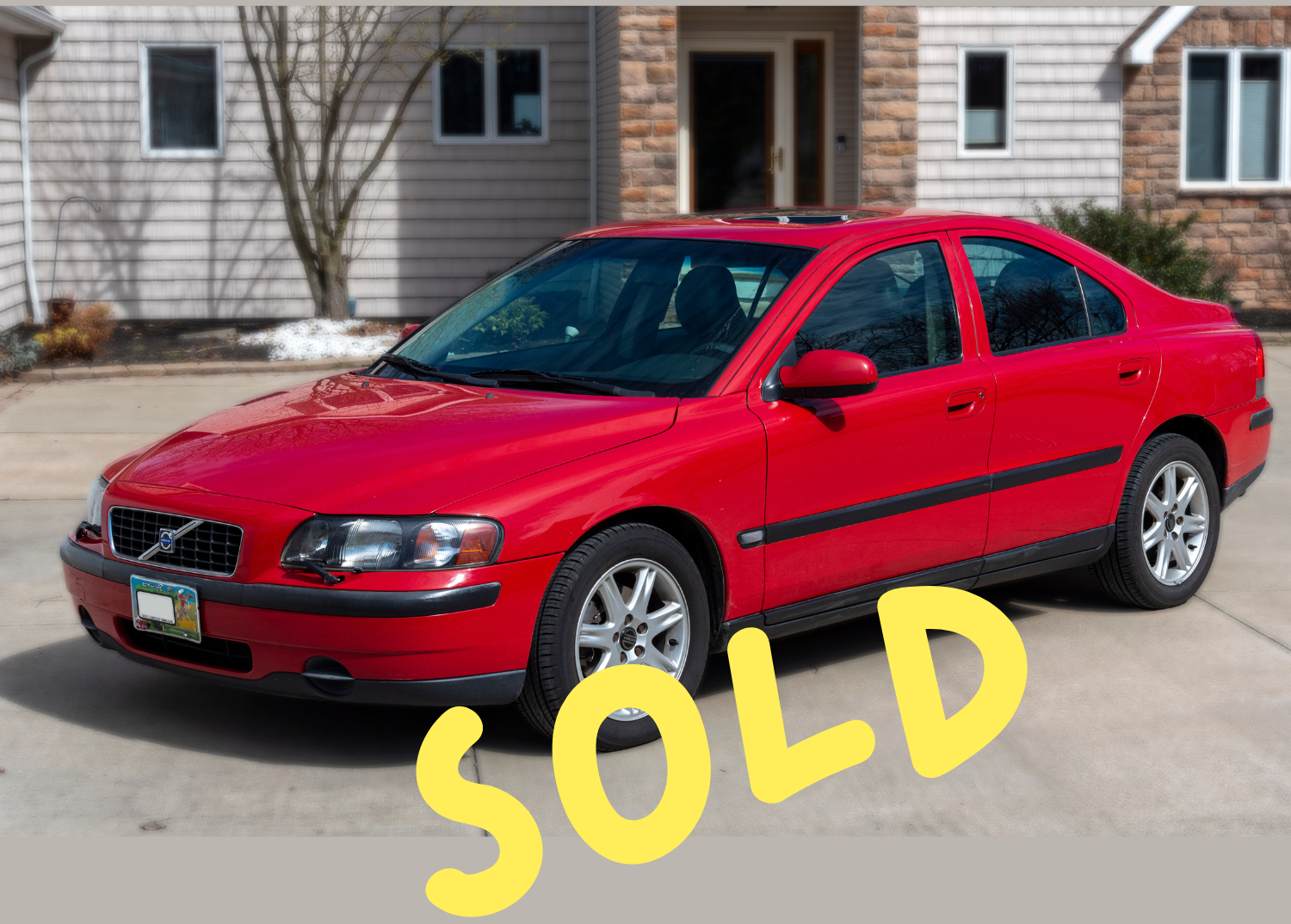
This past week I sold my car.
Who cares? No big deal. But it was. At least for me. I was blindsided by how emotional I am about it.
The only way to describe how I felt was that it was a bit like having to give a pet up for adoption because, for some very good reason, you could no longer keep it, but your heart desperately longed to. Why would I have that kind of reaction to an inanimate object? I've given it some thought, but to explain it, I should give you some background about my car.
I had my 2001 Volvo S60 for 25 years. When I bought it, it was a massive stretch financially, but I was willing to sacrifice every other luxury in my life because it was love at first sight. I ordered the car with the perfect configuration for me. Red with black leather interior, manual transmission, a sunroof, and the premium and touring packages that gave me a host of "new" features (like a dual cassette / CD player and a power driver's seat). Then I waited 12 weeks for it to be built before taking it home with me.
I hear you thinking ... it's just a car. And now, an old one. It doesn't have Bluetooth, cameras to help you back up, doesn't charge my phone without a plug for the 12-volt socket. The list of "it doesn't do" items is long by today's car standards.
So why the attachment? I think it boils down to what the car meant to me.
That car was with me through some of the most defining chapters of my adult life. It moved me from one country to another when my world was changing. It was the car I drove when I got news that made me stop and pull over because I couldn't see through my tears. It carried me and my music and my thoughts on long solo drives when I needed to think something through. It was mine, completely, in a way that very few things in life ever truly are.
When I ordered it, I was making a statement to myself. Not to anyone else. The colour, the leather, the stick shift, the sunroof. Every choice deliberate. I wasn't buying transportation. I was building something that reflected who I was and who I wanted to be. That's not nothing. That's actually quite a lot.
Objects can do that. They can become anchors for identity in ways we don't fully appreciate until they're gone. That car was part of how I understood myself for a quarter of a century. Independent. Particular about what I wanted. Willing to wait for the right thing. Not interested in what everyone else was driving. When I drove it, I was still the person who had chosen it so deliberately all those years ago. Letting it go meant admitting, in some quiet and unavoidable way, that time had passed. That I had changed. That the chapter it belonged to was behind me now.
And here's where my writer brain kicks in, because of course it does.
I didn't plan it this way, but it turns out I've already written this story. In Next Time, we learn that Maddie held on to her old Crown Victoria long past the point where it made any practical sense. It wasn't reliable transportation anymore. She knew it. But she couldn't let it go. At the time I wrote that detail, I thought I was just giving Maddie a quirk, something that felt true to who she is. A woman who holds on. A woman for whom things accumulate meaning the way sediment accumulates in layers, slowly and invisibly, until one day the weight of it surprises you.
Apparently, I was also writing about myself.
That's one of the stranger pleasures of fiction. Sometimes you put something true into a character before you've fully understood it in yourself. Maddie knew why she kept that car, even if she couldn't have articulated it. I know now why I kept mine. The object stops being just a thing. It becomes a vessel for every experience that happened in its presence. Twenty-five years of chapters, compressed into red paint and black leather and a stick shift that I could work in my sleep.
I think that's why I cried. And I think it's why, when you read about Maddie's Crown Victoria, it feels true even if you've never driven one. Because you've had your own version of it. A house you couldn't bear to leave. A piece of jewelry you can't throw away. A jacket that no longer fits but still hangs in your closet. We all have something that stopped being a thing and became a chapter of our lives instead.
Here's what I know now that I didn't know last week. The grief I felt standing in my driveway watching my car drive away with someone else behind the wheel was real and it was useful. Not just for processing the loss, but for understanding something about the human experience that I need to write about convincingly. Because my characters face versions of this. The struggle to release something or someone that helped shape who you became. The particular ache of recognizing that you are not the same person you were when it mattered most. The strange mix of gratitude and loss that comes with any meaningful ending.
As a writer, I borrow emotions rather than events from my own life. I haven't lived Maddie's life. But I have felt what she feels. And now, standing on the other side of this small but surprisingly profound goodbye, I understand her attachment to her car a little more than I did when I wrote it. I understand the particular stubbornness of holding on to something that no longer serves you practically but still holds your history. And when the time comes to write a character who has to let go of something that helped make them who they are, I'll remember exactly how this felt. The tightness in the chest. The tears that came from nowhere. The knowledge that the thing itself was just a car, and also so much more than that.
I'm glad I let myself feel it.