
On Criticism That Hurts, Awards, and Why Losing Isn't the Whole Story
There is a particular kind of vulnerability that comes with entering your work into a competition.
You prepare your submission, you pay your entry fee, and then you wait. You tell yourself you're doing it for the experience, or the visibility, or the feedback. And all of that is true. But underneath it, you are also hoping. You can't help it. You wrote this book. You put years of yourself into it. Of course you're hoping.
I entered Out of Time into the Wishing Shelf Book Awards because they do something most competitions don't. Whether you win or not, you receive written feedback from their panel of readers. Fifteen people read your book and score it, and then their comments come to you in a report. For an indie author without a traditional publishing house behind her, that kind of structured reader response is genuinely valuable. I told myself that was why I entered. The feedback. The data. The learning.
That was true. It was also a convenient way to protect myself from admitting how much I wanted to do well.
The winners were announced before the reader comments arrived. My name wasn't there. I still had the feedback to look forward to, and I held onto the hope that it would tell a different story, that I'd come close, that the readers had seen something worth seeing.
That hope made the first read harder than it might otherwise have been.
The First Read
When the results arrived, I read them the way I suspect most authors do. My eyes went straight to the criticism, and my brain filtered out almost everything else.
Here is what I saw:
"There's so much going for this novel, interesting characters, clever premise, well-written. But it's so long and so slow in parts, I found it frustrating. I sort of felt it needs a good editor with a big red pen to cut into it."
"This author can write, no problem there. But the problem is she needs to learn what NOT to write. In many ways, that can be the most difficult."
"Too slow. Too plodding for my taste. You don't have to tell the reader everything."
I sat with those words for longer than I'd like to admit. The first read was crushing. Not because the feedback was entirely wrong, but because it landed in that tender place where every writer keeps their doubts. What if I'd wasted everyone's time? What if the book I'd spent years on was simply too much? What if I was the author who didn't know what not to write?
It took a few days before I could go back and read the full report with any kind of clarity.
What I'd Filtered Out
When I finally did, I found things I hadn't registered at all on the first pass.
Writing style was identified as the strongest skill by eight of the fifteen readers. Five identified character development. Every single reader found the book easy to follow. Eight said they understood the readership and what they wanted. More than half said they would read another book by this author.
The Wishing Shelf pool has no genre divisions. Out of Time was sitting alongside thrillers, contemporary fiction, literary novels, and everything in between. These were not readers who came looking for a quiet, slow-burn romance about a woman in her late seventies. Some of them found it anyway, and responded to it. That matters.
But I also had to be honest with myself about the criticism that remained after I'd done that reframing. The pacing notes were consistent across multiple readers. That consistency means something. I couldn't dismiss it entirely just because the context wasn't ideal.
The Heavy Lifting I Didn't Talk About
Here is what those fifteen readers couldn't have known when they were reading Out of Time.
The novel isn't just telling Maddie and Nate's story at 78 and 83. It's quietly laying the groundwork for two more versions of their lives that don't exist yet on the page. Every detail that might feel like excess, every thread that seems to linger a beat too long, every moment that a reader might flag as unnecessary, those were breadcrumbs. Not for this story, but for the trilogy. I knew when I was writing Out of Time that there were two more books coming. The readers scoring it for the Wishing Shelf had no idea.
That's not an excuse. It's context. And it's the reason I initially resisted editing out the parts that felt slow, even when my instincts told me some readers would find them so. I needed them there. The architecture of the series required them.
Understanding that helped me make peace with the feedback in a way that felt honest rather than defensive.
The Same Week
The Wishing Shelf results and the Book Fest Awards results arrived in the same week. I don't think I could have designed a more clarifying experience if I'd tried.
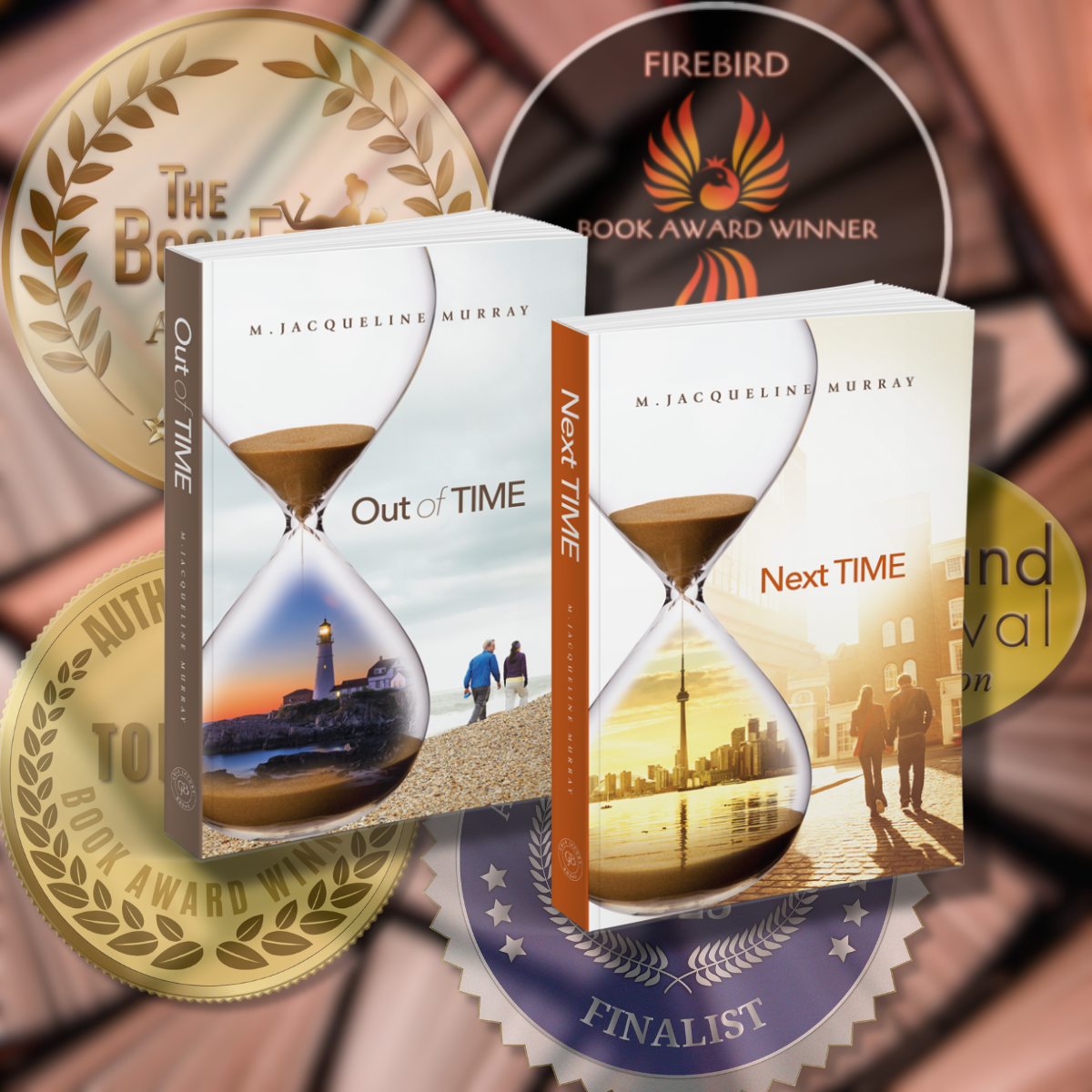
Out of Time won First Place in the Literary Fiction - Love and Romance category at the Book Fest Awards. I'd also taken a chance and entered the series as a whole into a second category, knowing full well I might not place. The Maddie and Nate series won First Place in the Book Series - Women's category.
That series win meant something specific to me. It wasn't just recognition for one book. It was recognition for what the two books accomplish together, which is exactly what the Wishing Shelf readers couldn't evaluate. Taken together, Out of Time and Next Time are doing something that neither book does alone. Seeing that recognized helped me understand, in a concrete way, that the choices I'd made in the first book weren't mistakes. They were investments.
What I'm Taking Forward
Next Time is about 20% shorter than Out of Time. I think that shows in the pacing, and I'm glad of it. I learned from writing the first book. Our Time, which I'm deep in right now, will be more compact still. That isn't me caving to criticism. It's me recognizing that each subsequent book in the trilogy has less structural groundwork to lay. The breadcrumbs are already in place. I can move more freely now.
I'm also a better writer than I was when I finished Out of Time. That should be true of any author who keeps practicing the craft. If it isn't, something has gone wrong.
Entering competitions is its own kind of crossroads. You step forward knowing the result could go either way, loss or celebration, and sometimes both in the same week. What I've come to believe is that the entering matters as much as the outcome. You find out things about your work, and about yourself, that you wouldn't find any other way.
The feedback hurt. The win helped. And somewhere between the two, I found something more useful than either: a clearer understanding of what I'm building, and why it's worth finishing.
Get your copy of Out of Time or Next Time direct from me or from your favourite book seller. Links here.