
What Would She Have to Un-Know?
Writing Historical Fiction Without Modern Hindsight
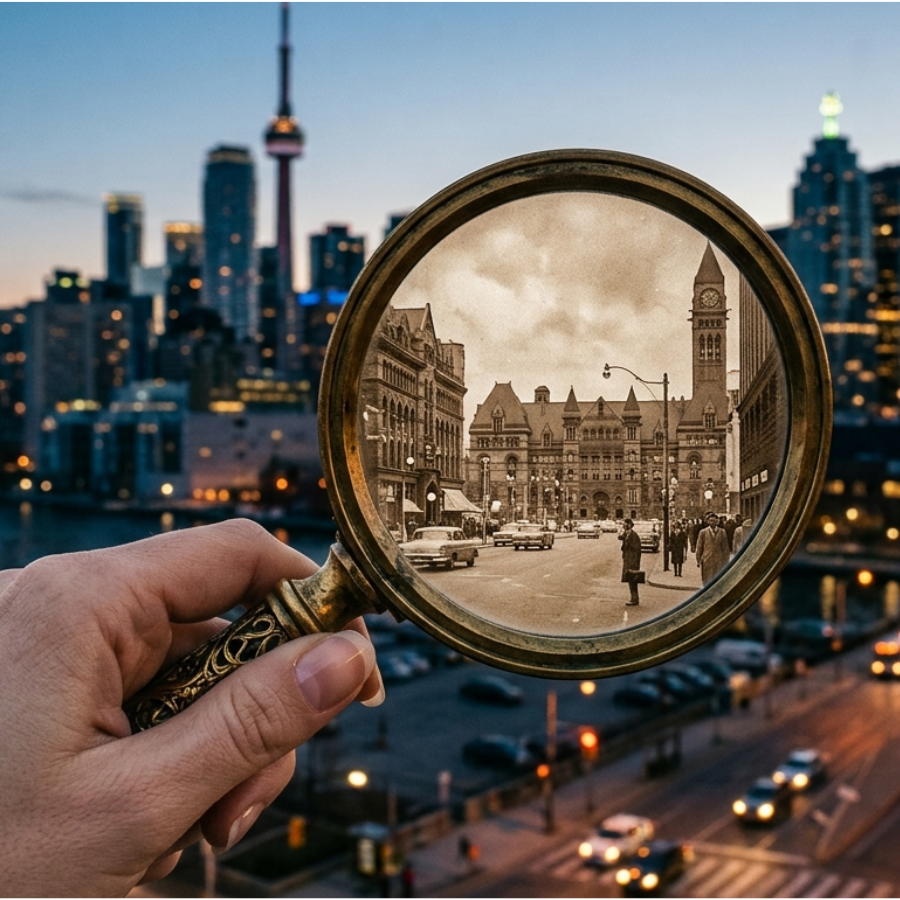
Facts are the easy part of historical fiction.
Anyone can look up what movie was playing at the local theatre in 1966, or what restaurant was serving dinner in downtown Toronto in 1976. That's research, and research is one of my superpowers. The hard part, the part that actually makes historical fiction work, is getting the era right inside my characters' heads.
It's the difference between a character who happens to be standing in 1966 and a character who genuinely thinks like it's 1966. If I'm not careful, I end up with someone who has the right dress and the right car but the wrong brain, a modern woman wearing a costume. It would be a bit like having her reach into her pocket for a cell phone when she should be running to the kitchen to grab the receiver off the wall by the door.
I felt this writing Out of Time, where Maddie looks back on her twenties, and I'm feeling it even more acutely with Our Time, set in 1966. It's not enough to know what was true. I have to remember what wasn't yet known, or wasn't yet questioned, and let my characters live inside that gap without judging them for it.
Take driving home after a few too many drinks. Today we'd call it reckless, illegal, morally indefensible. Sixty years ago, in a lot of circles, it was closer to a badge of honour, a demonstration that a man could hold his liquor and still find his way home. Or pregnancy. Cigarettes and the occasional drink weren't just tolerated, they were sometimes handed to expectant mothers by their own doctors, a beer recommended to help with hydration and keeping regular. Writing a character who accepts that advice without a flicker of doubt isn't me endorsing it. It's me refusing to let her know something she has no way of knowing yet.
And it's not just personal habits. Whole societies have done this on a larger scale. McCarthyism convinced a country that its neighbours might be secret enemies, and fear did the rest. Three centuries before that, Salem convinced itself that ordinary women were consorting with the devil, and it was mostly women, inconvenient ones, independent ones, who paid for it. In both cases the people living through it weren't stupid. They were certain. That's what makes them so unsettling to write about and so useful as a mirror.
Because here's the question that keeps nagging at me while I'm elbow deep in 1966 research. What are we certain about right now that won't hold up? I don't mean the easy, comfortable answers, the ones where we get to feel smugly ahead of our ancestors. I mean the blind spots we can't see precisely because we're standing inside them, the way people in 1966 couldn't see theirs.
Some of it might be marvel. Maybe a writer fifty years from now looks back at how fast AI reshaped medicine, at how a diagnosis that once took months of specialists and guesswork became personalized and precise almost overnight, and she writes that history the way I write about a young woman in 1966 boarding a plane alone for a country she'd never seen, for a job everyone told her she couldn't do, a little in awe of the women who opened doors to STEM careers for the generations, like me, that followed. And maybe some of it is the other kind of chapter, the kind where fear and uncertainty got used as tools, where people who should have known better let ignorance stand in for judgment because it was easier or safer or more profitable than the alternative. The same decade can hold a marvel and a mistake.
I don't know which parts of 2026 will read as naive to the writers and readers of 2076. Nobody living through their own era ever does. But it's humbling to write historical fiction and realize that someone, someday, might write about us with the same mix of tenderness and disbelief I bring to Maddie and Nate.
This is exactly the kind of question I sit with while drafting Our Time, set in 1966 Tokyo, where getting Maddie's mindset right matters as much as getting the date the cherry blossoms bloomed right. Every scene means asking myself what she wouldn't yet question, what she'd accept without a second thought, what she simply couldn't see coming. It's a strange discipline, deliberately un-knowing things I know perfectly well, but it's the only way the story rings true.
So I'll leave you with the question I keep asking myself. If a novelist sat down fifty years from now to write a character living in this exact year, what would she have to leave out of her character's head to get it right? What do we know for certain today that she'd have to un-know?
I'd genuinely like to know what you think. Drop a comment below.