
Whose career bends?
On the trad wife trend, the women who went first, and a heroine who refuses to choose
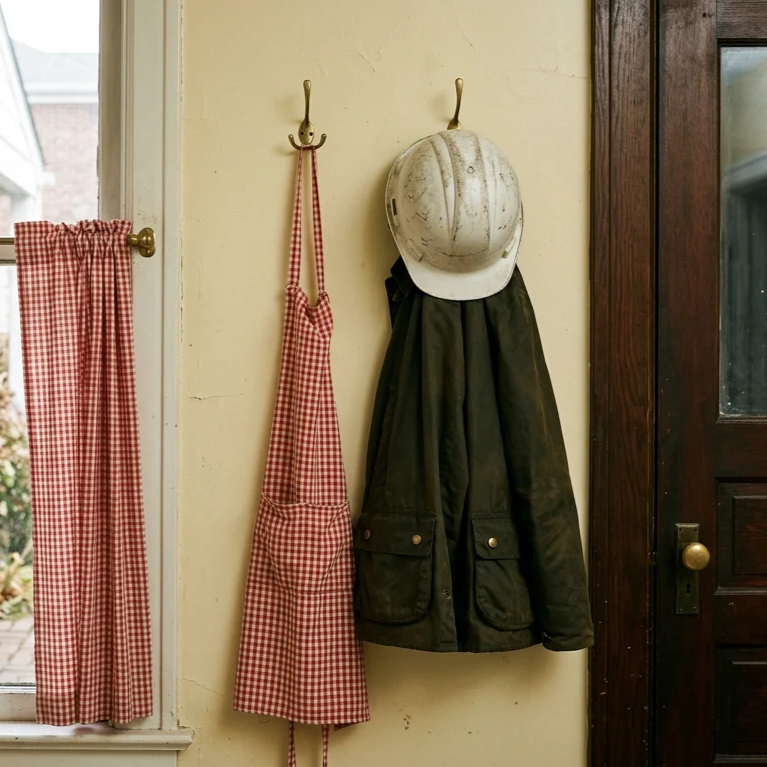
It's hard to scroll social media these days without running into a "trad wife." Soft lighting, fresh sourdough, a gingham apron, and a gentle message that a woman's highest calling is to give up her career and devote herself to her husband and home.
The videos are beautifully made. The kitchens are spotless, the children are calm, and the women look serene. The message underneath is just as carefully arranged: modern women were sold a bill of goods, ambition made us tired and unhappy, and the answer is to go back to the way things used to be.
I write novels set in the way things used to be. I've spent a lot of time in newspaper archives for my books, researching what was advertised, what people drove and what was playing on the radio in the 1960s and seventies. So when someone tells me that era was simpler for women, I have some questions.
A choice, not a calling
I want to be clear about one thing. Choosing to stay home with your family is a real choice, and many women I admire have made it. Raising children and running a household is hard, skilled work, and it deserves respect. That isn't what troubles me.
What troubles me is the packaging, the suggestion that this is how women are meant to live and the rest of us somehow wandered off the path. A choice made freely is one thing. A choice presented as a woman's natural role, her duty, her proper place, is something else entirely. That isn't a lifestyle trend. It's an old idea in a pretty dress, and it carries the same message it always did: a woman's ambitions come second.
And when a woman's ambitions come second, so do her paycheque, her pension, her independence, and her options if the marriage doesn't last. The soft-focus videos rarely mention that part.
The women who went first
I spent my early career in hydrogeology, often one of very few women in the room. In the 1990s I worked in Malaysia, where women were routinely sidelined in the workplace. I know what it takes to be taken seriously when people have already decided what you're for.
And I know I had it easier than the women who came before me. In Canada, women in the federal public service were required to resign when they married until 1955. In the United States, it took the Equal Credit Opportunity Act of 1974 before a woman could count on getting credit in her own name. Women not much older than me were asked in job interviews when they planned to quit and have babies, and nobody thought the question was strange.
Those women didn't retreat to a soft-lit kitchen. They found a closed door, and they pushed on it anyway, often at a cost to their reputations and their relationships. Every freedom I've had, to study science, to change careers more than once, to write novels after a whole other working life, rests on what they did.
Writing Maddie
When I created Maddie Cole, I wanted to honour those women.
Maddie comes from a family of mining engineers. Her great-grandfather, grandfather and father all studied at Queen's, and Maddie follows them, one of very few women in her faculty. She graduates with her master's in 1962 and is hired as the only female professional at a Toronto engineering firm. She moves back into her childhood bedroom, curls on Wednesday nights with a team called the Business Girls, and goes to church with her parents, where people whisper "Poor Maddie" and wonder whether she'll ever find a husband.
She keeps going anyway. In 1966 she spends months in Tokyo on her firm's first major international project, at a time when a female engineer in Japan was unheard of. Later, she builds her own engineering firm from the ground up.
When Nate first meets her in Next Time, she heads her firm's geotechnical group, and he can't quite believe a woman like her could be an expert in that sort of thing. He's ashamed of that reaction later. I wanted readers to feel that moment, because so many of us have been on the other side of that look.
Whose career bends?
Across all three books, Maddie and Nate keep running into the same question: when two people both have work they love, whose career bends?
In Out of Time, they meet at 78 and 83, and Maddie tells Nate that if he wants to marry her, he has to want her as is. She isn't turning her whole life upside down for anyone. In Next Time, Nate takes a job in Boston without including her in the decision, and she tells him he's shown her what matters to him. In Our Time, the question comes up again, and Maddie's answer is that it shouldn't bend at all. Not hers, and not his.
That, to me, is the whole point. Not that women must work or must stay home, but that no one's life should bend by default. A good partnership doesn't ask one person to shrink so the other can grow.
Not simpler. Smaller.
The trad wife trend sells a fantasy of a simpler time. I write about that time. It wasn't simpler for women. It was smaller.
Smaller choices. Smaller paycheques. Smaller lives than many of them wanted. The women who pushed back did it so the rest of us could choose our own direction, including home, if that's where we want to be. Choosing it freely is the freedom they won for us. Being told it's where we belong is exactly what they fought.
Was there a woman in your life who went first? A mother, aunt, teacher or boss who pushed back so you wouldn't have to? I'd love to hear about her in the comments.
If you'd like to meet Maddie, you'll find Out of Time and Next Time at colejacobsbookstore.com.